
Same failures, different decade: white paper calls for new tactics to prevent grantmaking mistakes
Posted on 03 Aug 2026
A decade of Australian auditor-general reports shows grantmakers and decision makers repeatedly…
Posted on 20 Mar 2026
By Kathy Richardson, executive director, SmartyGrants

Most evaluation stops too early.
Programs conclude. Participants submit final reports. Immediate outcomes are captured. Then attention shifts to the next round.
But many grants are designed to create change that unfolds over years, not weeks.
Over the past 3½ years, Our Community and SmartyGrants worked with two international performing arts organisations on a longitudinal evaluation.
Both organisations help artists to find new audiences in their own countries and across the world through festivals and special events.
The aim was to understand how participation in these festivals and events influences professional development over time, not just immediately after the event.
The initiative followed 75 artists through a baseline survey and four follow-ups over approximately 2½ years.
Participants were paid for their time. Surveys were structured around original goals, decision-making and relationship development, and they invited respondents to be reflective.
As expected, participation reduced over time. Even so, the longitudinal data provides rare insights into how professional impact develops in complex international contexts.
Our Community provided the evaluation design and the SmartyGrants platform pro bono, alongside staff time and direct financial investment.

"Impact was cumulative, shaped by multiple experiences, funding decisions and relationships over time."
The most consistent shift identified in the data was in confidence. Participants reported increased confidence in:
For one cohort, survey data showed a statistically significant increase in self-reported confidence two years after participation in festivals and events. That level of statistical strength is unusual in small longitudinal samples.
Participants also described a common pattern: an initial post-event slump followed by renewed clarity and momentum. That cycle is widely discussed anecdotally. This study provides structured evidence of the phenomenon, and also underlines the weakness of evaluations that take into account only immediate outcomes.
Importantly, participants did not attribute outcomes to a single intervention. Impact was cumulative, shaped by multiple experiences, funding decisions and relationships over time.
Short-term reporting should capture early indicators that may shape later outcomes, even when final results are not yet visible.
Changes in confidence and decision-making can influence:
These shifts often occur well before longer-term outcomes become visible. However, they can also fluctuate over time. Early signals such as dips or gains in confidence may change or rebound as participants continue through a program.
For grantmakers, the task is not to treat these indicators as final outcomes, but to track them as early signals that may help explain later results and guide program improvement.
SmartyGrants was used not only for program applications, but for the multi-year follow-up surveys. Each survey response was tied to a single secure record. This enabled:
Participants effectively evaluated their own progress against baseline goals. That depth of reflective tracking is difficult to achieve using standalone survey tools.
“What made this evaluation unique was how the technology enabled a ‘journal-style’ follow-up process,” said report author Jen Riley, until recently SmartyGrants’ chief impact officer.
“Using SmartyGrants, participants were able to return to the same form over time, progressively adding updates as their projects evolved. This allowed them to reflect on their original intentions and assess their progress against their own goals, rather than responding to a static, one-off evaluation.”
Longitudinal, reflective evaluation is practical and cost-effective. It does not require large samples or complex infrastructure. It requires thoughtful design and a platform capable of linking data over time.
The implications extend beyond the arts sector. Leadership programs, workforce development initiatives, community capacity building grants and innovation funds all face the same challenge: outcomes emerge slowly and not always how we expect.
Grantmakers who invest in not just monitoring early signals but measuring results over time will have stronger evidence and clearer narratives, and will ultimately make better funding decisions.
SmartyGrants is committed to advancing evaluation practice, not just administering grants. If you are interested in testing longitudinal evaluation within your programs, we would welcome a discussion.
Contact our Managed Services team at service@smartygrants.com.au (Australia and New Zealand) or service@smartygrants.co.uk (UK/EU).
Posted on 03 Aug 2026
A decade of Australian auditor-general reports shows grantmakers and decision makers repeatedly…
Posted on 25 Jun 2026
Australia distributes an estimated $125 billion in grants annually, but grantmaking, unlike…
Posted on 25 Jun 2026
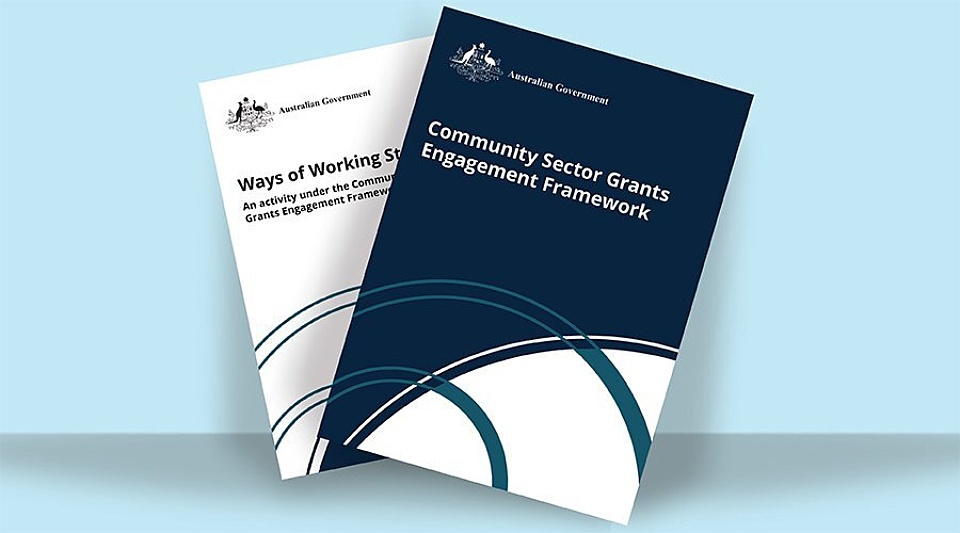
The federal government's Community Sector Grants Engagement Framework is "on track," the Department…

Posted on 25 Jun 2026
Australia’s grants administration system has centralised bureaucracy instead of expertise, creating…

Posted on 25 Jun 2026
Nine in 10 Australian social impact measurement practitioners are now using AI in their work, but…
Posted on 24 Jun 2026
More than 300 of Australia’s top social impact professionals and leaders will gather in Sydney on…

Posted on 03 Jun 2026
A new report has found that ongoing financial, workforce and governance pressures mean the…

Posted on 20 May 2026
The Australian National Audit Office (ANAO) has released a new report in its Audit Lessons series,…

Posted on 20 May 2026
The NSW government's administration of a flood recovery grants program has largely met requirements…
Posted on 07 May 2026
A Tasmanian parliamentary inquiry has heard new evidence that the state's Department of Health has…

Posted on 07 May 2026
A fast-growing region of New Zealand – home to the world’s best adventure tourism, awe-inspiring…
Posted on 07 May 2026
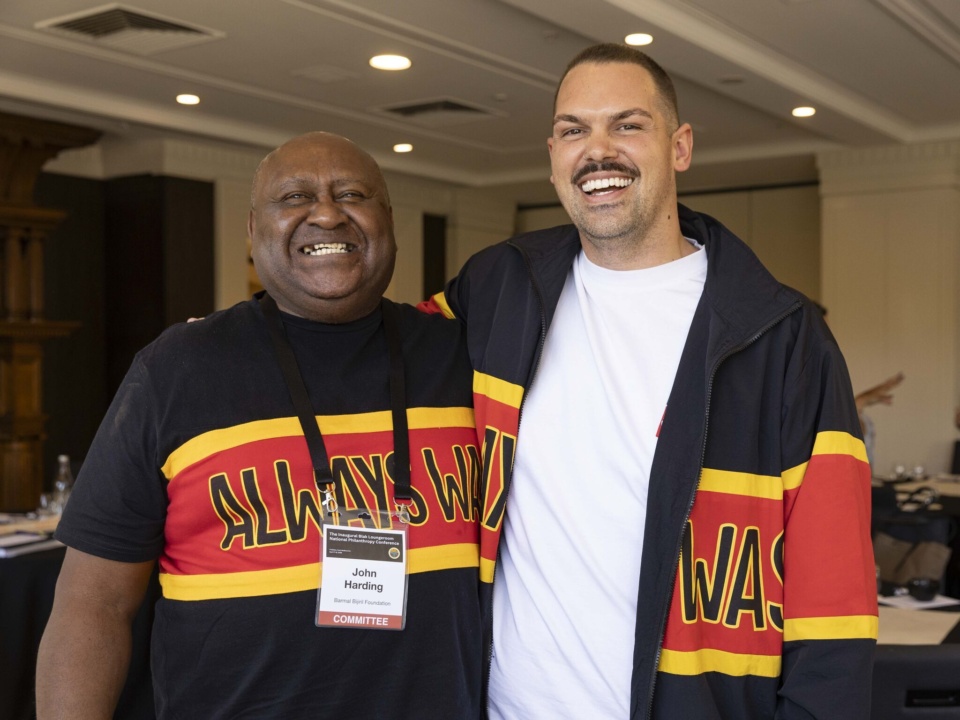
Organisers of Blak Loungeroom, a historic Indigenous-led philanthropy conference held in Melbourne…