
Same failures, different decade: white paper calls for new tactics to prevent grantmaking mistakes
Posted on 03 Aug 2026
A decade of Australian auditor-general reports shows grantmakers and decision makers repeatedly…
Posted on 07 May 2026
By Matthew Schulz, journalist, Institute of Grants Management

A fast-growing region of New Zealand – home to the world’s best adventure tourism, awe-inspiring landscapes and the first commercial bungee jumping – is taking a leap into the unknown world of artificial intelligence to improve its grants programs.
The Queenstown Lakes District sits near the southern end of New Zealand’s South Island: a spectacular patchwork of glacial lakes, alpine peaks, and some of the world’s most dramatic scenery. Its population is about 54,000, but on any given night that number swells to approximately 100,000 as visitors pour in for skiing, mountain biking, and the kind of adventures the region has built its global reputation on.
Tourism accounted for just over 30 per cent of the district’s $4.7 billion GDP at March 2024, according to the council’s 2024–2025 annual report, and the population was projected to grow at around 2.5 per cent annually through to 2035 – making it one of the fastest-growing districts in the country.
That growth has brought pressure. The council has more than doubled its staff numbers over the past five years, increasing from around 300 to more than 700 by mid-2025. Along the way, demand for services, infrastructure, and community support have surged along with the population.
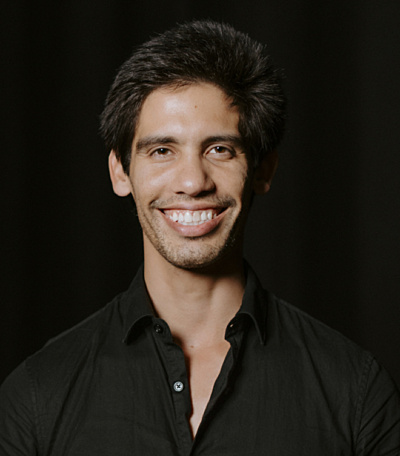
Among the new hires is Giovanni Stephens, the council’s community investment advisor, who has taken on a role that is part grants administrator, part strategic advisor, and part partnerships broker.
Stephens spoke to Grants Management Intelligence about the council’s experiments with artificial intelligence in the wake of his appearance at a SmartyGrants “Muster” that drew New Zealand’s leading grantmakers to Auckland in March of this year.
Stephens said the council’s grants were part of a bigger community investment picture.
“Grants are like one of many tools in the toolbox,” he said.
For example, the council also administers community leases – meaning it discounts or forgoes commercial rents on community spaces – and provides in-kind support ranging from venue hire to fee waivers.

In the 2024–25 financial year the council received requests for funding worth more than $5 million, and it granted about $3 million. The council expects to distribute about $2.25 million in grants in the 2025–26 year, including $1.68 million for multi-year agreements.
The council’s main grant streams are its Community Fund, Events Fund, Waste Minimisation Community Fund, arts schemes, and Heritage Incentive Grant.
The council’s 27 Community Fund recipients for 2025–26 received grants ranging from $2,000 for the Queenstown Fijian Community Charitable Trust to $15,000 for the Salvation Army. Other recipients included environmental groups, migrant communities, air rescue services, arts organisations, and mental health trusts.
Before Stephens joined, he said, the program was fragmented.
Some applications arrived handwritten at a customer service desk. Others came via email, standalone web forms, or spreadsheets. Around two years ago, the council centralised everything onto the SmartyGrants platform – a move that coincided almost exactly with the explosion of accessible large language model tools.

"We have been careful to make sure personally identifiable and confidential information is not input into any LLM service in our grants programs."
Stephens described four ways the council had already integrated AI into its grants work, each building on the last, but said there were crucial areas in which AI capabilities fell short.
When SmartyGrants launched, the council found itself holding years of previously gathered free-form text data without standardised categorical fields.
“We used LLMs to classify that qualitative data and turn it into categorical information,” Stephens explained, “effectively backfilling our standard fields.”
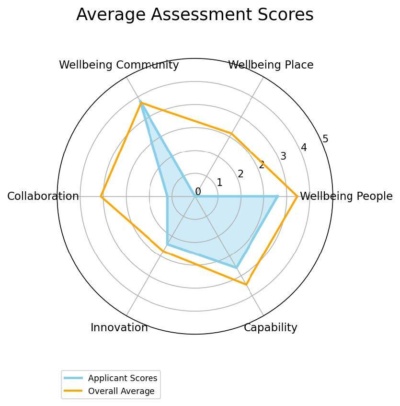
The council’s second use case was summarisation. Faced with 100 applications and a week to process them for an assessment panel, Stephens built a tiered reporting system based on AI-generated summaries. The top level gave panel members a one-sentence description of each organisation, a one-sentence summary of what each organisation was requesting, and the amount sought. Below that sat automated one-pagers covering organisational background, expected outcomes, key summaries, and assessments against funding criteria. The result was a 100-page document produced in a fraction of the time it would have taken manually.
The example Stephens shared at the Auckland Muster – an AI-generated “panel pack” for a sample organisation – showed assessment scoring and a radar chart of outcomes dimensions to demonstrate summaries in practice.
He said data was “scrubbed” before the process, to prevent the AI from ingesting private data.
The council’s next use case involved “data augmentation”. Stephens said staff used AI “research agents” to gather publicly available information about applicants, and used this to help staff verify claims, enrich records, and discover context that human assessors could employ in assessments.
Finally, the council had used advanced modelling to improve its grants.
Employing a portfolio theory approach, Stephens used AI-assisted modelling to calculate recommended funding allocations across the entire grants pool. Working from assessors’ scoring of applications and prior funding history, the system generated an “optimal” allocation designed to maximise overall community impact subject to budget constraints, sector caps, and regional balance requirements.
When the modelling was applied to the 54 applications in the previous year’s Community Fund round, the results were striking, with the council members praising the process. The model’s recommendations correlated closely with the council’s final decisions – with the notable exception of sports funding, because sports groups had already been supported through a separate mechanism the model had not accounted for.
AI-assisted merit assessment proved less successful.
“In our experimentation, we’ve found that it’s not particularly strong on that front,” Stephens said.
“There’s a lot of latent information that comes into an assessor’s mind – relationships they hold, things they’ve seen from the group’s work.” He said human assessors remained central to evaluation.
The council has not committed to a single AI platform, because the technology is developing quickly – OpenAI's GPT models led the field for some time and were then leapfrogged by Anthropic's Claude.
In practice, the team used a range of large language models depending on the task, treating the technology as a category of tools rather than a specific product.
Stephens stressed that the team’s AI use was governed by carefully defined policies.
Data privacy was a central concern: applicant data was anonymised before being passed to external models, and applicant consent was sought where data augmentation was used.
“We have been careful to make sure personally identifiable and confidential information is not input into any LLM service in our grants programs; however, it is plausible that we will include more explicit statements in all our forms about the use of AI in the future.”
He said the council’s privacy team was assessing standards across the organisation.
Stephens acknowledged that New Zealand’s Privacy Act framework – and the council’s own policies – were adapting to AI.
“I suspect quite a few organisations in New Zealand might be violating the Privacy Act with what they input into an LLM, and it is an underdeveloped area of legislation.”
For grantmakers nervous about AI – particularly those in government agencies with strict data policies – Stephens highlighted the lower-risk entry point he had explored himself: using simulated panels and synthetic or historical application data to test and refine funding criteria without exposing real applicant information. “You can use invented data, invented applications, and use it to fine-tune your processes anyway,” he said.
On the applicant side, meanwhile, an arms race had quietly begun. Stephens estimated that well over half of applications showed signs of AI-assisted drafting. The effects were mixed: some applications were more concise and better structured; others were verbose and information-thin. “You get a lot of words that say very little,” he said of some applications.
The council responded by offering funding workshops to coach local organisations on how to use AI well in applications: to keep things tight and factual, and to avoid obscuring real achievements.
One challenge for the council continues to be responding to applications that don’t quite make it over the line as submitted. Stephens said responses must be human.
“Even today, I opened up three applications and had conversations for about half an hour [with each applicant],” he said. “The human strength ... is building relationships, [and] to then discover more and help [applicants] through challenges, such as language. These are all things AI hasn’t quite gotten to, yet.”
While AI had made applying easier, Stephens, that in turn generated more applications, which increased the burden on assessors. On the other hand, information was flowing more freely, so organisations that had previously lacked the capacity to apply were stepping up.
For sceptical grantmakers who worry the technology is too risky or too complex, Stephens is reassuring and direct: “It would be like being resistant to using a computer, or Excel, or a calculator. It’s a valuable tool and it’s worth exploring.”
Examine Queenstown Lakes District Council’s (QLDC’s) grants programs
Read QLDC’s latest privacy policy
About SmartyGrants “Musters” | Register for the Sydney Muster, 9.30am–3.30pm, Thursday, May 28
Grantmakers energised by Melbourne learning and networking
SmartyGrants a case study in keeping AI tools human | How SmartyGrants is rolling out its AI tools
Posted on 03 Aug 2026
A decade of Australian auditor-general reports shows grantmakers and decision makers repeatedly…

Posted on 25 Jun 2026
Australia distributes an estimated $125 billion in grants annually, but grantmaking, unlike…
Posted on 25 Jun 2026
The federal government's Community Sector Grants Engagement Framework is "on track," the Department…

Posted on 25 Jun 2026
Australia’s grants administration system has centralised bureaucracy instead of expertise, creating…

Posted on 25 Jun 2026
Nine in 10 Australian social impact measurement practitioners are now using AI in their work, but…

Posted on 24 Jun 2026
More than 300 of Australia’s top social impact professionals and leaders will gather in Sydney on…

Posted on 03 Jun 2026
A new report has found that ongoing financial, workforce and governance pressures mean the…
Posted on 20 May 2026
The Australian National Audit Office (ANAO) has released a new report in its Audit Lessons series,…

Posted on 20 May 2026
The NSW government's administration of a flood recovery grants program has largely met requirements…
Posted on 07 May 2026
A Tasmanian parliamentary inquiry has heard new evidence that the state's Department of Health has…

Posted on 07 May 2026
A fast-growing region of New Zealand – home to the world’s best adventure tourism, awe-inspiring…
Posted on 07 May 2026
Organisers of Blak Loungeroom, a historic Indigenous-led philanthropy conference held in Melbourne…