
Same failures, different decade: white paper calls for new tactics to prevent grantmaking mistakes
Posted on 03 Aug 2026
A decade of Australian auditor-general reports shows grantmakers and decision makers repeatedly…
Posted on 19 Mar 2026
By Jen Riley, co-chair, Social Impact Measurement Network Australia (SIMNA)

When I first sat down with Kate Randall, outcomes and evaluation analyst at the Community Broadcasting Foundation (CBF), one thing was immediately clear: CBF’s journey to impact-led grantmaking was thoughtful, grounded, and deeply embedded in the values of its sector.
CBF is an Australian funder with a 40-year legacy of supporting the country’s diverse and vibrant community media sector. This case study offers highly transferable lessons for any grantmaker looking to embed outcomes-focused thinking.
With more than 400 grantees, including First Nations stations, multicultural broadcasters, LGBTQIA+ media, and youth-focused outlets, CBF's challenge wasn’t finding meaningful stories – it was finding a way to systematically capture and reflect on their impact.
“Before we started this work, impact measurement didn’t really look like anything,” Kate says. “We did a lot of reporting on activities and outputs, and now and then we’d publish a great case study with some photos, but we had no way of aggregating outcomes across the portfolio.”
That changed in 2022, when CBF began a multi-year transformation, a shift that included adoption of the SmartyGrants Outcomes Engine.

"There was a strong appetite across the sector to better articulate our value and impact."
CBF’s decision to shift was catalysed by a significant internal restructure in 2017–18 that streamlined nine grant programs into three. Alongside governance reviews and strategic reflections, the board identified the need for outcomes and impact reporting. This internal push aligned with a broader shift across the community media sector, driven by peak bodies and codified in Roadmap 2033: Community broadcasting’s plan for greater impact.
“There was a strong appetite across the sector to better articulate our value and impact,” Kate says. “Our grantees needed a way to demonstrate the difference they were making, especially the smaller stations with limited resourcing.”
From the outset, CBF knew that shifting from compliance to learning would take time. Many of the foundation’s grantees are small, volunteer-run organisations with limited capacity for administrative load.
“We took a gently-gently approach,” Kate explains. “There were changes to our data collection that I, as an evaluator, would have loved to do earlier, but the team kept us grounded. We had to make sure the changes were genuinely appropriate and achievable for our community.”
CBF's first step was to embed the SmartyGrants Outcomes Engine into its application and monitoring forms. The foundation customised the outcomes and metrics sections, asking grantees to nominate up to four outcomes aligned to CBF’s own framework. For each, grantees were asked to provide metrics, baselines, targets, and data collection methods.
To support grantees, CBF developed practical guidance materials and delivered webinars on outcome measurement basics. It resisted the urge to set a standard list of metrics at the get-go, opting instead to share a list of suggested indicators and let organisations tailor their approach.
Kate led the internal development of a theory of change to map the organisation’s pathways to impact. Through participatory workshops, the team identified a “missing middle” between short-term project outcomes and broader sector goals. This led to a set of outcomes that were then tested with community-based advisory committees.
“Our grants advisory committees are made up of people who work or volunteer in the sector, and they sense-checked everything,” Kate says. “They helped us refine language, highlight missing areas, like the importance of wellbeing in workplace culture, and made sure our model reflected real experience.”
Following this, Kate designed a monitoring, evaluation and learning (MEL) framework with seven guiding questions covering impact, process and relevance. A full audit of 200+ indicators was conducted, and the data collection system was streamlined to fewer than 100. Kate focused on changes that would:
The MEL framework has led to improved internal reporting. CBF now delivers:
Kate has bold ambitions for SmartyGrants Analytics, a new tool introduced to the system in 2025 that reveals near-real-time insights gleaned from grants data. Rather than exporting data and charting it in spreadsheets, Kate plans to create dashboards accessible by boards, committees, and eventually grantees.
“We want to make our data dynamic and accessible so people can see how the work is progressing at any time, not just at acquittal,” she says.
CBF’s story is a powerful reminder that building a culture of impact doesn’t happen overnight. It requires strategic alignment, sector consultation, patience, and enabling technology.
“Start small. Be purposeful. And don’t wait for perfect,” Kate advises. “You’ll learn as you go, and the value of those insights is worth the effort.”
Watch a replay of the Philanthropy Ireland webinar above.
Community broadcaster tunes into measuring social change
Learn more about the SmartyGrants Outcomes Engine
This case study was presented to the SmartyGrants/Philanthropy Ireland learning session and was first published in Making Change Visible: A practical guide to impact measurement for funders, produced jointly by SmartyGrants and Philanthropy Ireland.
Posted on 03 Aug 2026
A decade of Australian auditor-general reports shows grantmakers and decision makers repeatedly…
Posted on 25 Jun 2026
Australia distributes an estimated $125 billion in grants annually, but grantmaking, unlike…
Posted on 25 Jun 2026
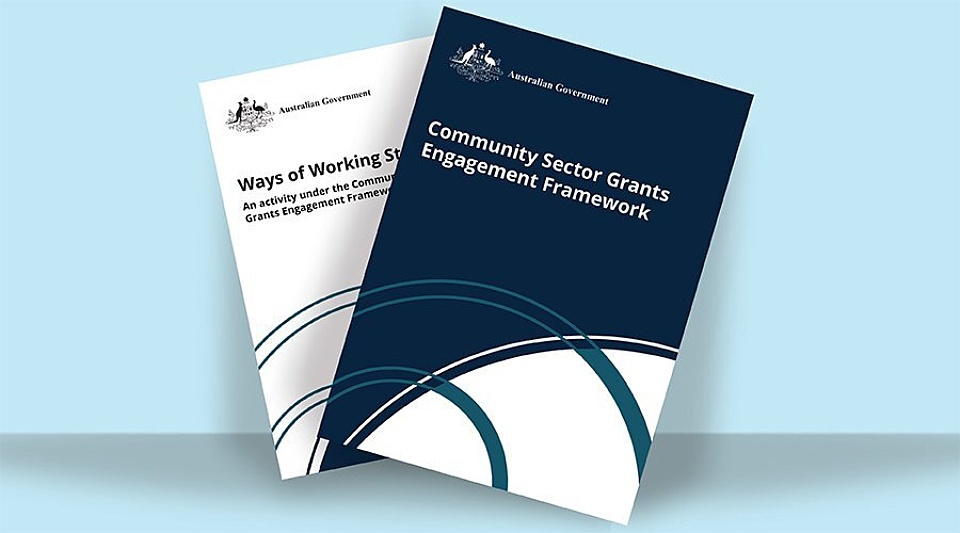
The federal government's Community Sector Grants Engagement Framework is "on track," the Department…
Posted on 25 Jun 2026
Australia’s grants administration system has centralised bureaucracy instead of expertise, creating…

Posted on 25 Jun 2026
Nine in 10 Australian social impact measurement practitioners are now using AI in their work, but…
Posted on 24 Jun 2026
More than 300 of Australia’s top social impact professionals and leaders will gather in Sydney on…

Posted on 03 Jun 2026
A new report has found that ongoing financial, workforce and governance pressures mean the…
Posted on 20 May 2026
The Australian National Audit Office (ANAO) has released a new report in its Audit Lessons series,…
Posted on 20 May 2026
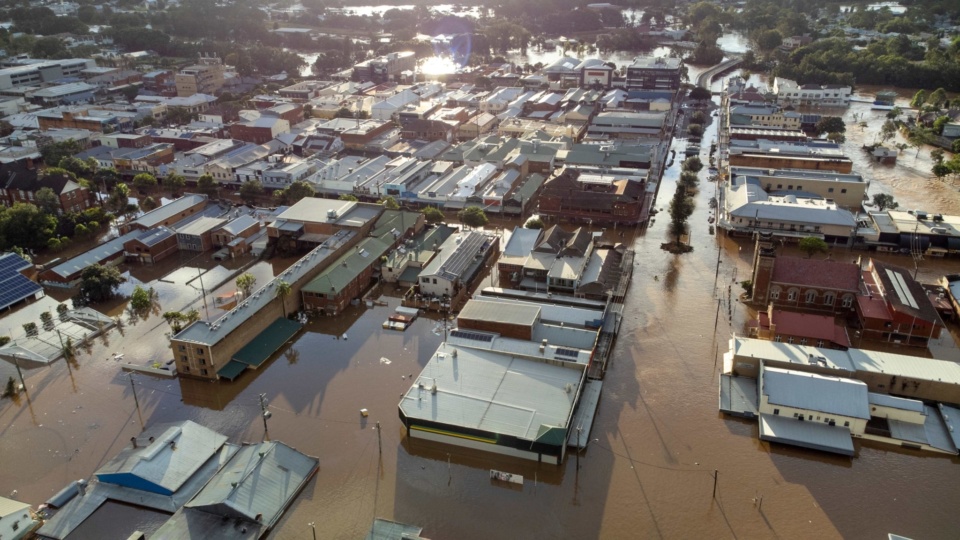
The NSW government's administration of a flood recovery grants program has largely met requirements…
Posted on 07 May 2026
A Tasmanian parliamentary inquiry has heard new evidence that the state's Department of Health has…

Posted on 07 May 2026
A fast-growing region of New Zealand – home to the world’s best adventure tourism, awe-inspiring…
Posted on 07 May 2026
Organisers of Blak Loungeroom, a historic Indigenous-led philanthropy conference held in Melbourne…