
Same failures, different decade: white paper calls for new tactics to prevent grantmaking mistakes
Posted on 03 Aug 2026
A decade of Australian auditor-general reports shows grantmakers and decision makers repeatedly…
Posted on 05 Mar 2025
By Adam Ognall, Executive Director of Partnerships and Practice, Philanthropy Australia

When I sat at the airport in London late last year about to board my flight back to Melbourne after Philanthropy Australia’s UK study tour, my mind whirred with everything I had learned. Three months on, my thoughts have coalesced in a number of areas, but particularly in relation to the way funders and the not-for-profit community partner. Here are five ways funders can increase their impact.
Trust is hard, but the first step is intent. A personal highlight for me was taking the group to visit the Pears Foundation, with which I have worked for more than decade, and where I learned much about trust-based philanthropy and power-sharing in practice. Director Amy Braier describes Pears as a relational, invitation-only foundation that provides multi-year, unrestricted and flexible funding that “meets the needs of our fundees”. Trust and genuine relationships where they “learn from each other” underpin the model.
“We find good people and good organisations and we help them do what they do better,” Amy said.
The group was also wowed by Ben Cairns, director of the Institute of Voluntary Action and Research (IVAR), which facilitates the Open and Trusting Grantmaking Community. It’s a UK movement of 140 foundations that have signed up to eight grantmaking commitments. Open and trusting grantmaking is characterised by patience, persistence and empathy, said Ben. It recognises that the money and attributes of a foundation are one set of assets but “it’s only by combining those assets with the expertise and direct and lived experience of funded organisations that social change can really have impact”.
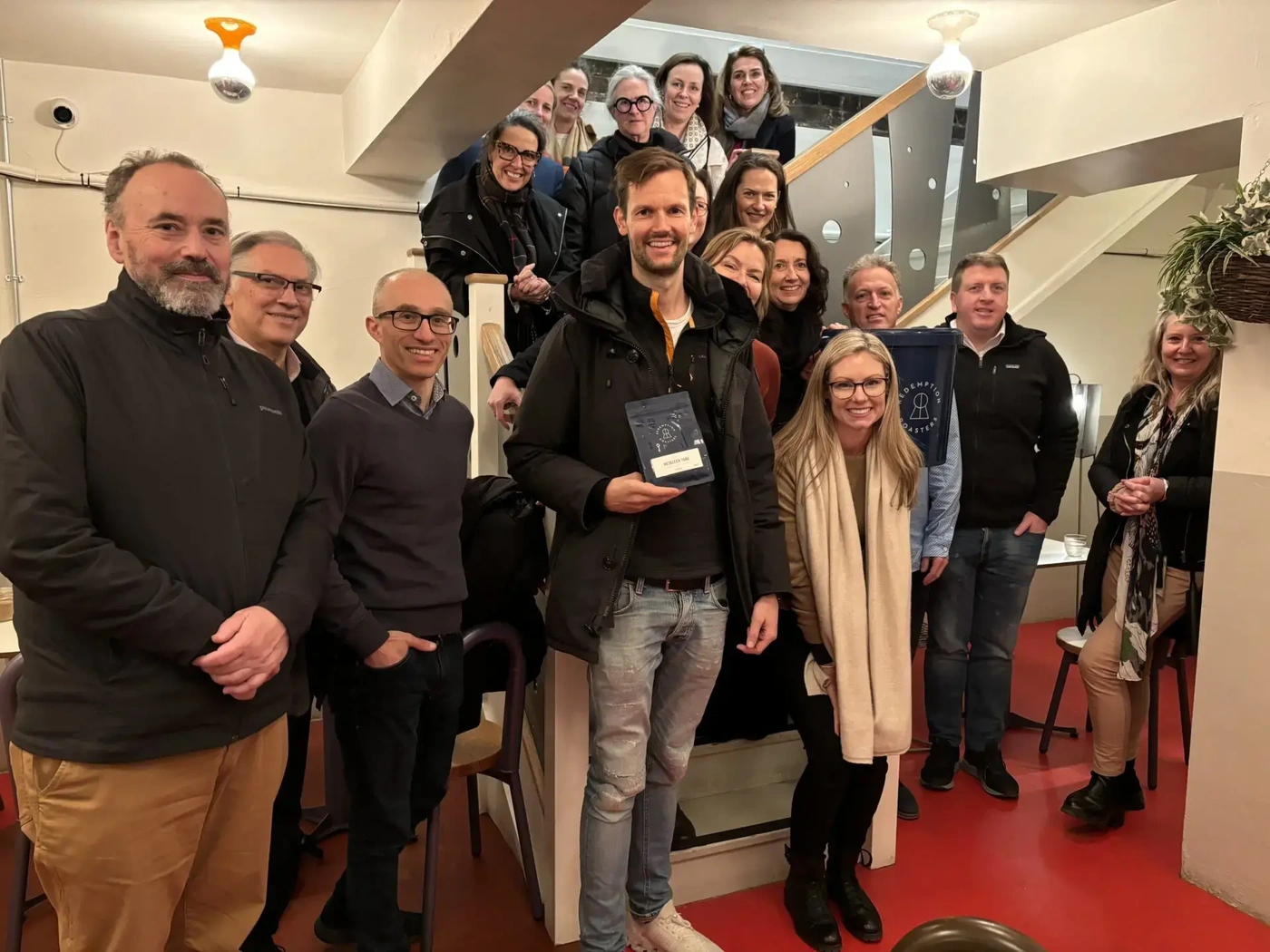
While there is growing interest in collaborations in Australia, pooled funds is perhaps an area that’s less well known. The group heard from Lena Baumgartner and Alice Sachrajda at a session hosted by the Paul Hamlyn Foundation. They defined a pooled fund as one in which multiple funders contribute funds and delegate grantmaking authority to a separate entity run by experts who advance the pool’s objective or strategy. The key point is the delegation of grantmaking authority and an understanding that the knowledge required to make the best funding decisions lies not with the funders but with its subject experts, who may be academics, arts practitioners or lived experience advisory groups. The group heard from fascinating case studies, such as the UK Democracy Fund and the Power of Pop Fund.
Jonny Page at the Esmée Fairbairn Foundation (EFF) provided an incredible session on EFF’s “spectrum of capital approach”, by which all the foundation’s funds are invested for impact that supports its mission.
“Every investment has an impact and it’s our choice as to 1) whether we want to know what that impact is, and 2) whether we want to steer that impact to something that supports our strategy and our reason for existence, and we firmly believe that it does,” Jonny said.
At one end is EFF’s £50–60 million grant fund and at the other is its £1.3 billion sustainably invested endowment. In between are three pots – £60 million, or 5 per cent of total funds, in impact-first social investments, £10 million in experimental and themed impact investments and another £60 million that targets ESG leaders. It was a fantastic lesson in how to use investments thematically and for “contributing to solutions” rather than harm.
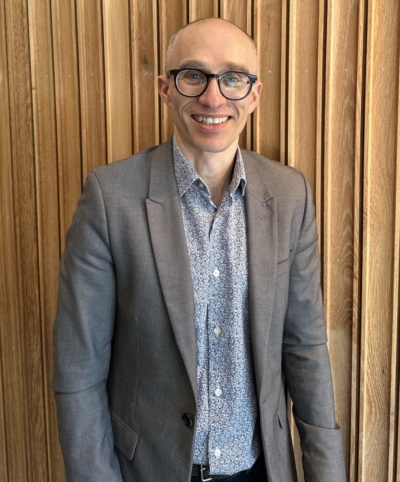
There is much for our sector to learn from the development of 360Giving, the UK open data movement and tool. Katherine Duerden explained that 360Giving is a charity that supports funders in publishing open and comparable data about their grants and builds tools to help people explore the data to inform their decision-making.
“You can see who’s funding what, where and how much… so that’s helping people to understand where their funding fits alongside others. It’s also helping charities to find out who might fund them and it’s powering research that we and others are doing to understand the sector and the trends in grantmaking,” said Katherine.
More than 300 funders of all sizes are working with 360Giving and it holds over 1 million grant records with a collective value of £270 billion. 360Giving is very much achieving its aim of being an essential tool for funders and fundees alike, one they can use to better ensure funding goes to where it is most needed through more informed, effective and strategic grantmaking.
Sufina Ahmad MBE, director of John Ellerman Foundation, talked about measures the foundation has taken to improve its grantmaking practices. She highlighted the importance of taking on feedback through two “perception audits” the foundation commissioned from an independent provider, which sought input from grantees and informed the changes the foundation made. One change meant providing more informative correspondence declining grant applications, so “we are much better at telling people why they haven’t been funded by us and how they could improve their applications”. Another meant making sure application information on the foundation’s website was as clear as possible.
The foundation also joined IVAR and the Foundation Practice Rating and focused on improving its pre-application process, spending time helping applicants prepare their applications.
Many of the lessons from the UK study tour aligned with issues raised in Philanthropy Australia’s recent Better Philanthropy Telescope report, which “takes the pulse of the sector”.
Posted on 03 Aug 2026
A decade of Australian auditor-general reports shows grantmakers and decision makers repeatedly…
Posted on 25 Jun 2026
Australia distributes an estimated $125 billion in grants annually, but grantmaking, unlike…
Posted on 25 Jun 2026
The federal government's Community Sector Grants Engagement Framework is "on track," the Department…
Posted on 25 Jun 2026
Australia’s grants administration system has centralised bureaucracy instead of expertise, creating…

Posted on 25 Jun 2026
Nine in 10 Australian social impact measurement practitioners are now using AI in their work, but…
Posted on 24 Jun 2026
More than 300 of Australia’s top social impact professionals and leaders will gather in Sydney on…

Posted on 03 Jun 2026
A new report has found that ongoing financial, workforce and governance pressures mean the…
Posted on 20 May 2026
The Australian National Audit Office (ANAO) has released a new report in its Audit Lessons series,…

Posted on 20 May 2026
The NSW government's administration of a flood recovery grants program has largely met requirements…
Posted on 07 May 2026
A Tasmanian parliamentary inquiry has heard new evidence that the state's Department of Health has…

Posted on 07 May 2026
A fast-growing region of New Zealand – home to the world’s best adventure tourism, awe-inspiring…
Posted on 07 May 2026
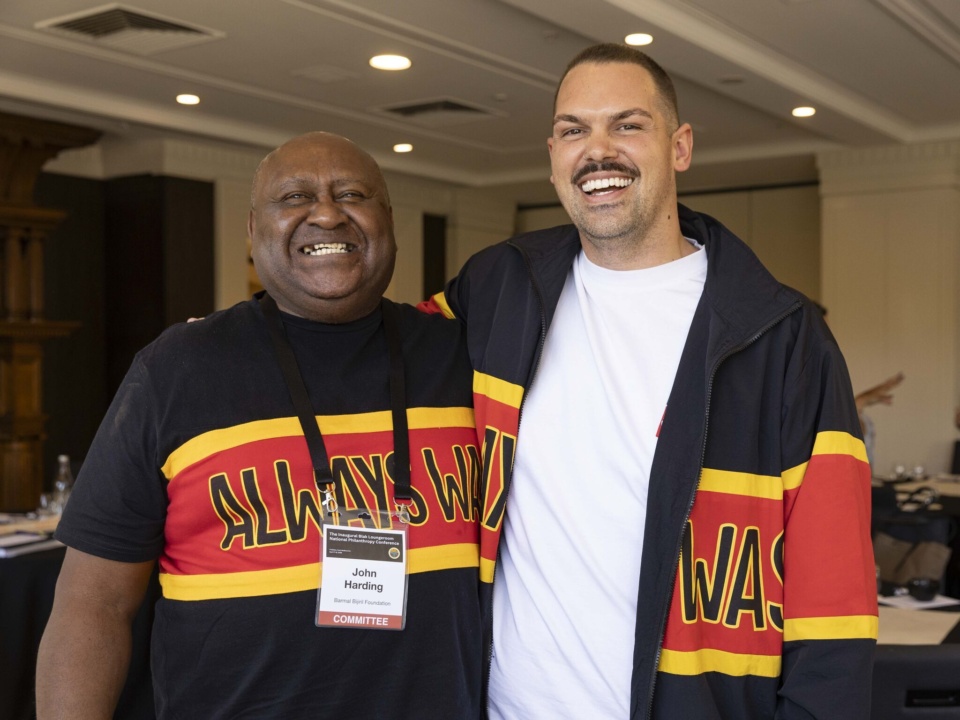
Organisers of Blak Loungeroom, a historic Indigenous-led philanthropy conference held in Melbourne…