
Corruption watchdog finds officials tried to hide $285m in covid grant losses
Posted on 12 Nov 2026
Victoria’s corruption watchdog has slammed the failure of senior public servants to alert their…
Posted on 19 Nov 2026
By Kathy Richardson, Executive Directors, SmartyGrants

Public sector grant managers should resist judging grant applications by the quality of the prose and instead focus on public value, a gathering of Australian Commonwealth grantmakers has heard.
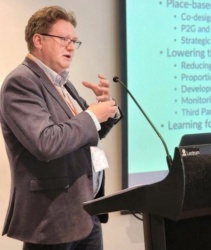
Integrity expert, Churchill Fellow and renowned “grants nerd” Nick Sellars encouraged grantmakers to resist engaging in a “beauty contest” that selected the best-written applications, and focus instead on the plausibility of the applicant’s theory of change.
Grantmakers should ensure there was a clear line of sight from the application to their policy objectives, Mr Sellars told the SmartyGrants meeting in Canberra this month.
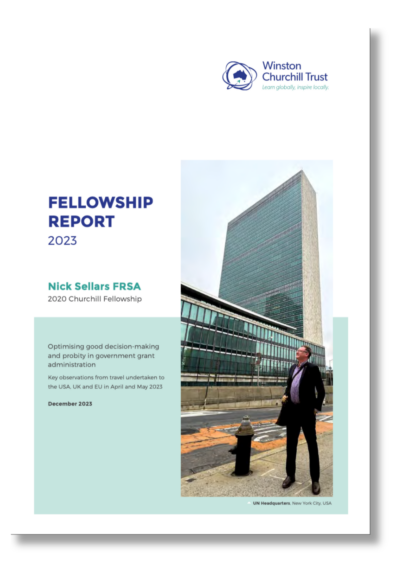
Mr Sellars outlined some common traps in grantmaking, including seeking to “score the unscorable” (apply scores to highly subjective criteria), failing to identify and tackle entrenched biases, and failing to apply the “can they do it?” test (judge the applicant’s ability to achieve their objectives).
He said Commonwealth grant funding was increasing despite budget pressures, with a growing emphasis on “impact” rather than “stimulus”.
To ensure proper use of public money, grants needed to be effective, efficient, economical and ethical, he said.
Mr Sellars said there was not enough appreciation of the knowledge, skills and abilities needed to administer grants well.
“Great grants and great grantmakers bring policy ideas to life,” he said. “You need to be agile, focused, and have a learning mindset.”
“You have to treat AI like a team member, like an intern – a team member you have to train for many months before they become useful.”
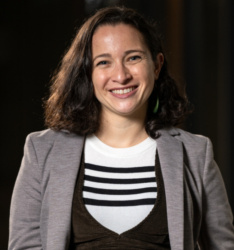
SmartyGrants chief data scientist Paola Oliva-Altamirano told the meeting that research published by the Research on Research Institute (RoRI) had found that the number of applications to 12 major research funders across six countries had increased by an average of 57% between 2022 and 2025.
Dr Oliva-Altamirano said the quality of applications had improved significantly as well, with artificial intelligence levelling the playing field and helping to eliminate the grants “beauty contest” that Mr Sellars had referred to earlier.
This meant grantmakers had a harder job sifting and sorting applications, and they too were turning to AI to handle the increased load, she said.
Dr Oliva-Altamirano outlined how the use of AI could save time but could also produce a high error rate, so it needed to be handled carefully.
“In SmartyGrants we think of AI as more like a thinking partner than something that does your job,” she said.
“You have to treat AI like a team member, like an intern – a team member you have to train for many months before they become useful.”
Dr Oliva-Altamirano said grantmakers needed to recruit carefully (pick the right AI tool), induct it as you would an intern (give it proper context, rules and boundaries – harnesses), subject it to probation (including testing it on work you’ve already completed), provide proper supervision (spot-check its work, set an error budget), give detailed feedback, and review its work – then promote it or let it go.
She urged grantmakers to check three things when recruiting an AI tool:
Dr Oliva-Altamirano outlined how SmartyGrants applied a “dignity lens” (developed by transdisciplinary academic Lorenn Ruster) to the design of its AI tools, with close consideration of four factors:
These rules were shaping the developing of an upcoming SmartyGrants eligibility assessment tool, she said.
Dr Oliva-Altamirano concluded by providing some practical governance tips for grantmakers considering using AI:
Posted on 12 Nov 2026
Victoria’s corruption watchdog has slammed the failure of senior public servants to alert their…

Posted on 11 Nov 2026
A detailed report into federal grants by the Commonwealth auditor has been delayed again and is now…

Posted on 11 Nov 2026
For many people, ESG sounds like corporate and business jargon. For not-for-profits it might be the…

Posted on 11 Nov 2026
Every jurisdiction in Australia has an Auditor-General, and each one produces detailed reports…

Posted on 11 Nov 2026
A funder uses AI to help design a grant program. An applicant uses AI to write an application. An…

Posted on 03 Aug 2026
A decade of Australian auditor-general reports shows grantmakers and decision makers repeatedly…
Posted on 25 Jun 2026
Australia distributes an estimated $125 billion in grants annually, but grantmaking, unlike…
Posted on 25 Jun 2026
The federal government's Community Sector Grants Engagement Framework is "on track," the Department…
Posted on 25 Jun 2026
Australia’s grants administration system has centralised bureaucracy instead of expertise, creating…

Posted on 25 Jun 2026
Nine in 10 Australian social impact measurement practitioners are now using AI in their work, but…
Posted on 24 Jun 2026
More than 300 of Australia’s top social impact professionals and leaders will gather in Sydney on…

Posted on 03 Jun 2026
A new report has found that ongoing financial, workforce and governance pressures mean the…