
Same failures, different decade: white paper calls for new tactics to prevent grantmaking mistakes
Posted on 03 Aug 2026
A decade of Australian auditor-general reports shows grantmakers and decision makers repeatedly…
Posted on 25 Jun 2026
By Matthew Schulz, journalist, Institute of Grants Management
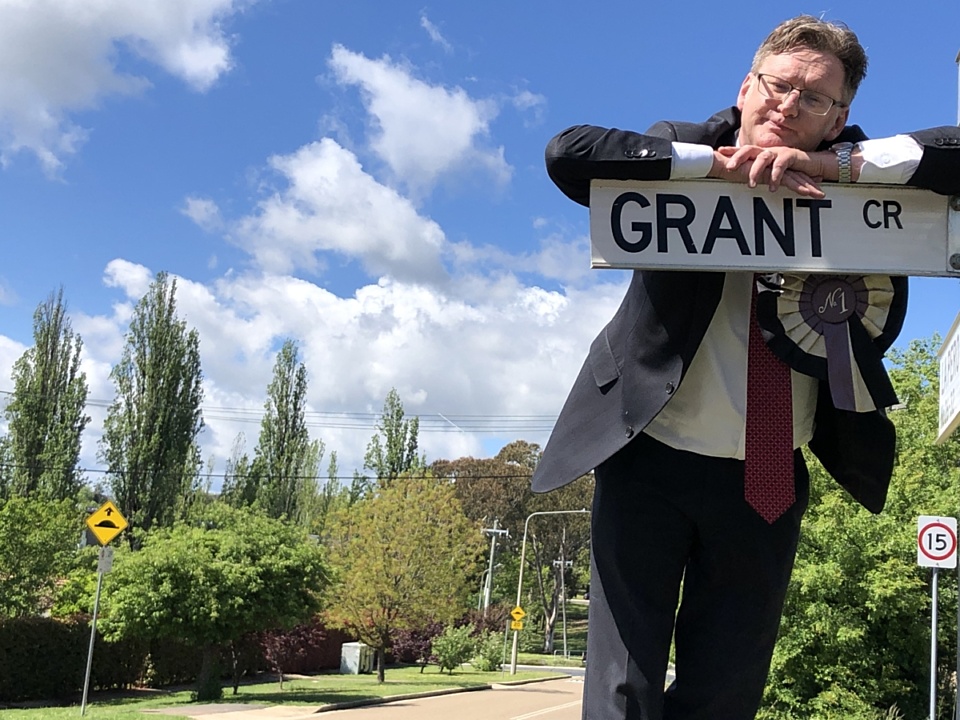
Australia distributes an estimated $125 billion in grants annually, but grantmaking, unlike procurement, offers no professional qualifications, no career pathway, and no industry association for the people who work in the field. A veteran government integrity specialist says that gap is costing taxpayers.
Nick Sellars, a former senior federal public servant who now runs the Canberra-based consultancy Integrity Partners Australia, made the case last month as keynote speaker at SmartyGrants’ Sydney muster of grantmaking professionals, which tackled the many big topics facing the specialist sector.
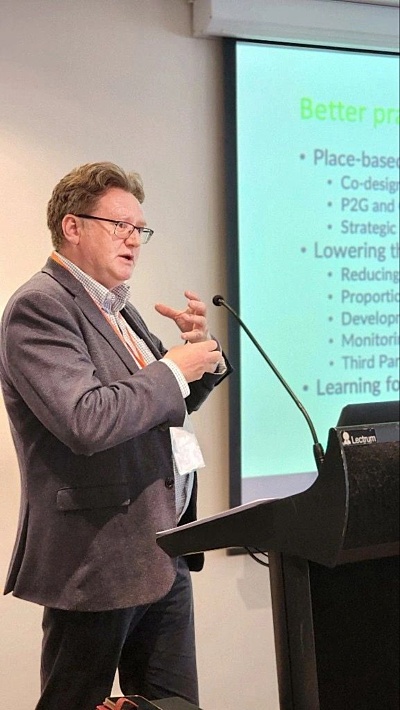
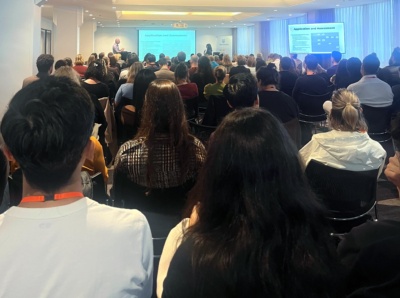
The event at the city’s Vibe Hotel in Goulburn St attracted more than 150 grantmakers from across New South Wales seeking professional development in areas such as artificial intelligence, outcomes measurement, process mapping, reporting, workflows and analytics. The turnout lent tacit support to Sellars’ view that Australia needs a distinct grants profession.
Sellars should know, having spent two decades in senior Commonwealth roles spanning corruption prevention, strategic policy, risk and audit, and ministerial and parliamentary work before turning his focus to grantmaking.
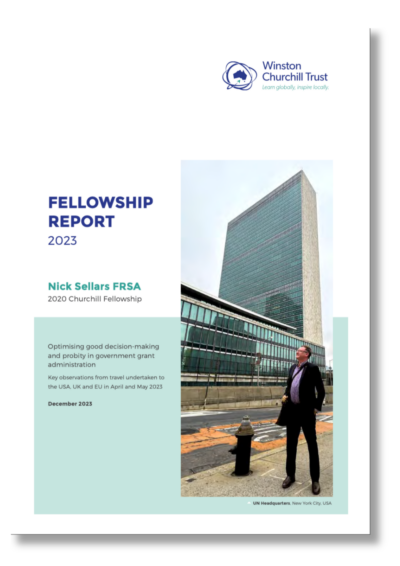
He won a Churchill fellowship to investigate better practice in grant administrations, which took him to the US, the UK and Europe. The resulting 2023 report – which stands as a rare investigation into the field – is eye-opening.
Australia, Sellars believes, has built strong transparency architecture, such as the Commonwealth grants rules and principles (CGRP) and a centralised grants database that tracks federal spending, which puts it ahead of the UK and the US in some respects. But in professional development and workforce strategy, he believes Australia lags.
"Until we see grants as a strategic resource, and until we realise the prevailing idea that anyone can do grants is a fallacy, we won't get there," Sellars told Grants Management Intelligence after the Muster event.
"People think grants are easy. There's nothing to it. Applicants write in, they make their case, you pick the best ones. What's hard about that? Only someone who has never done grantmaking would say that!"
He notes that Australia has no professional association for grantmakers, no formal qualification pathway, and no recognised career stream – in contrast to the nation’s procurement system, which has an established professional stream within the Australian Public Service Commission (APSC), university courses, and industry support.
Sellars points to the United Kingdom as a model of what investment in the area could look like. After grant scandals during the David Cameron era prompted the question of how much the government was spending on grants – a question officials could not easily answer – the UK built a centralised system from scratch.
The latest statistics show that the UK government spent £160 billion on grants in 2024–25, around 12 per cent of total government expenditure.
While Australia has the Grants Connect database to tabulate government spending on grants, the UK has a government grants management function housed in the Cabinet office, a functional standard for grants, a grants academy that offers a five-day residential course and a "licence to practise" credential, and agency-level government grants champions responsible for mentoring staff and maintaining professional standards.
The UK is now developing an advanced licence to practise for skilled and expert practitioners and has a 2026–29 strategy in place.
In the US, the former Biden administration's cross-agency priority goals included building "a robust financial assistance community that identifies and strengthens the core competencies of grants managers." A national hiring initiative for grants professionals followed, along with a government-wide training module.
Those initiatives have since been wound back under the Trump administration, which has shifted federal grants policy towards political oversight.
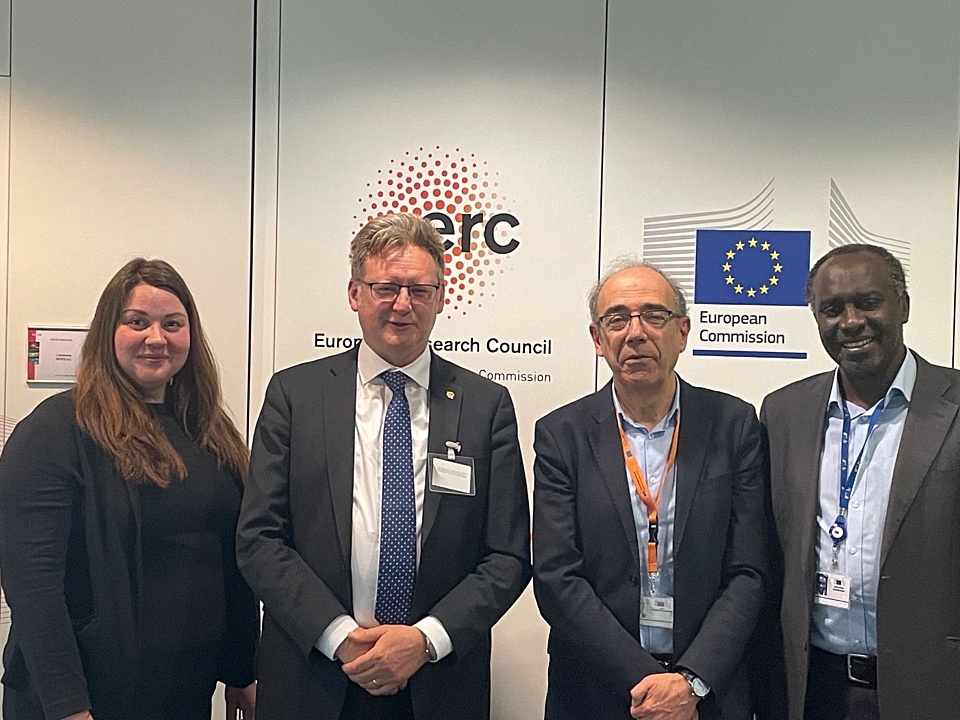
"The problem you're trying to solve isn't 'What's the best project?' The problem is 'How am I going to get the best public value with this money?'"
Sellars said that the consequences of not investing in the profession show up in program design before money changes hands.
"There is always a risk that grantmaking becomes a beauty contest – the best-written application gets picked, not necessarily the best outcome," he said. "The problem you're trying to solve isn't 'What's the best project?' The problem is 'How am I going to get the best public value with this money?' That is a very different question."
Poor grant design tends to invite poor applications. Sellars described programs that effectively ask applicants to guess what the funder wants, producing inflated bids close to the maximum funding level and proposals that mimic previous successful applications.
"Please don't ask questions that invite your applicants to lie to you," he said, "and please don't ask questions that play no role in your decision-making."
Sellars is also critical of the reflex response to grants scandals – more rules, tighter compliance, heavier administrative burden – and argues it treats the symptoms rather than the disease.
"When something goes wrong, the instinct is to impose more controls," he said. "But if you look at what auditors actually find, it's rarely that someone broke the rules. It's that the governance wasn't documented. You said you were going to do one thing and your funding decisions show you did something else."
The Australian National Audit Office (ANAO) has been a persistent critic of grants governance, with numerous reports over the past decade citing inconsistent decision-making, inadequate documentation, and poor program design.
Sellars sees those findings as evidence not of corruption, but of a profession that has never been properly resourced.
"There are some really great government grantmakers I've worked with over the years," he said.
“It’s not a barren landscape – there is a community of grantmakers old and new who are just waiting to be brought into a profession. They want to teach and they want to learn.
"A challenge in my Churchill study was that participants were worried about being compared. No one wants to show you what's in the black box. They're all very nervous that they don't do it right."
He said developing a grants profession and using probity advisors would help to ensure that practitioners matched the problem they were attempting to solve with the appropriate grant selection methodology.
His Churchill fellowship report sets out four specific goals for Australian governments:
The report also proposes developing resource management guides and practitioner tools to help ensure consistency and encourage innovation in grant design.
Sellars noted that New South Wales had already made steps in regard to probity, legislating in 2023 that grant decision-makers must seek independent probity advice for complex, high-value, or sensitive grants – including any grant decided by a minister. Sellars believes it is a template worth adopting elsewhere.
"The New South Wales legislation requires a probity adviser to be appointed for any grant that is complex, sensitive, or otherwise has elevated risk," he said. "If that legislation were followed nationally, and if we had a cohort of probity advisers who understand grants rather than applying procurement rules, things would improve."
The case for change, he said, is not just about avoiding scandal. Skilled grantmakers with deep policy knowledge and adaptability can build community capability, reach marginalised groups and direct public money towards good outcomes.
"Grants make something happen, sometimes faster than market forces would provide," Sellars said. “Sometimes they stop things. If you understand that core principle – that it’s a policy intervention – everything else follows."
Posted on 03 Aug 2026
A decade of Australian auditor-general reports shows grantmakers and decision makers repeatedly…
Posted on 25 Jun 2026
Australia distributes an estimated $125 billion in grants annually, but grantmaking, unlike…
Posted on 25 Jun 2026
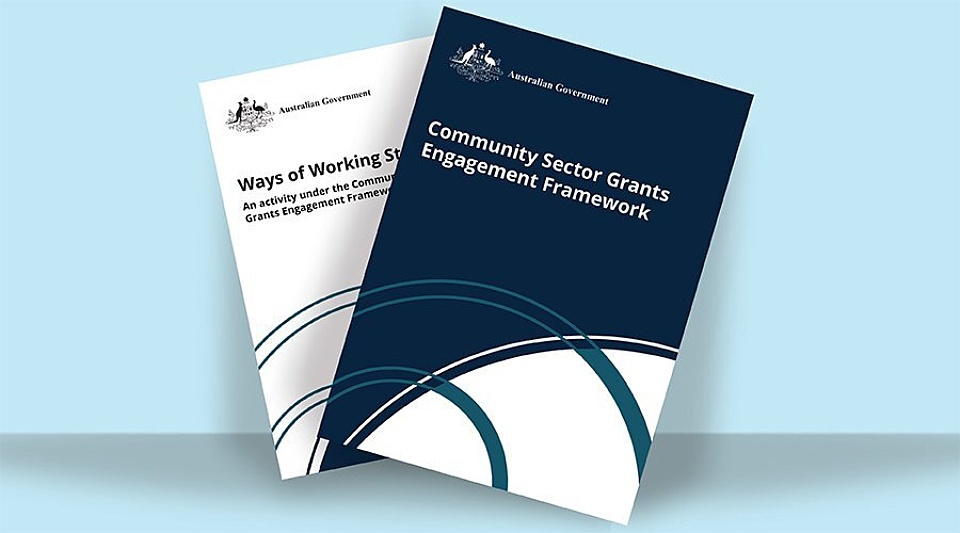
The federal government's Community Sector Grants Engagement Framework is "on track," the Department…
Posted on 25 Jun 2026
Australia’s grants administration system has centralised bureaucracy instead of expertise, creating…

Posted on 25 Jun 2026
Nine in 10 Australian social impact measurement practitioners are now using AI in their work, but…
Posted on 24 Jun 2026
More than 300 of Australia’s top social impact professionals and leaders will gather in Sydney on…

Posted on 03 Jun 2026
A new report has found that ongoing financial, workforce and governance pressures mean the…

Posted on 20 May 2026
The Australian National Audit Office (ANAO) has released a new report in its Audit Lessons series,…
Posted on 20 May 2026
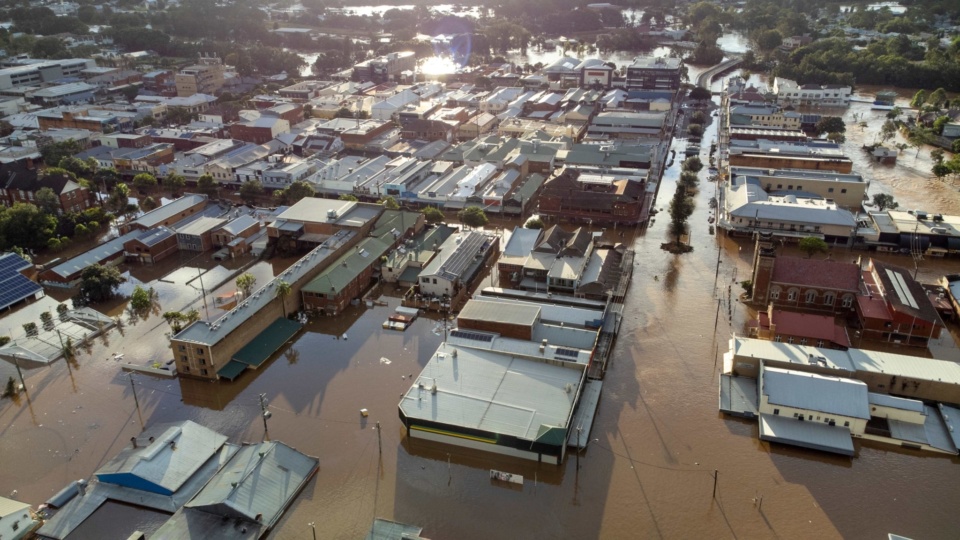
The NSW government's administration of a flood recovery grants program has largely met requirements…
Posted on 07 May 2026
A Tasmanian parliamentary inquiry has heard new evidence that the state's Department of Health has…

Posted on 07 May 2026
A fast-growing region of New Zealand – home to the world’s best adventure tourism, awe-inspiring…
Posted on 07 May 2026
Organisers of Blak Loungeroom, a historic Indigenous-led philanthropy conference held in Melbourne…